What happened
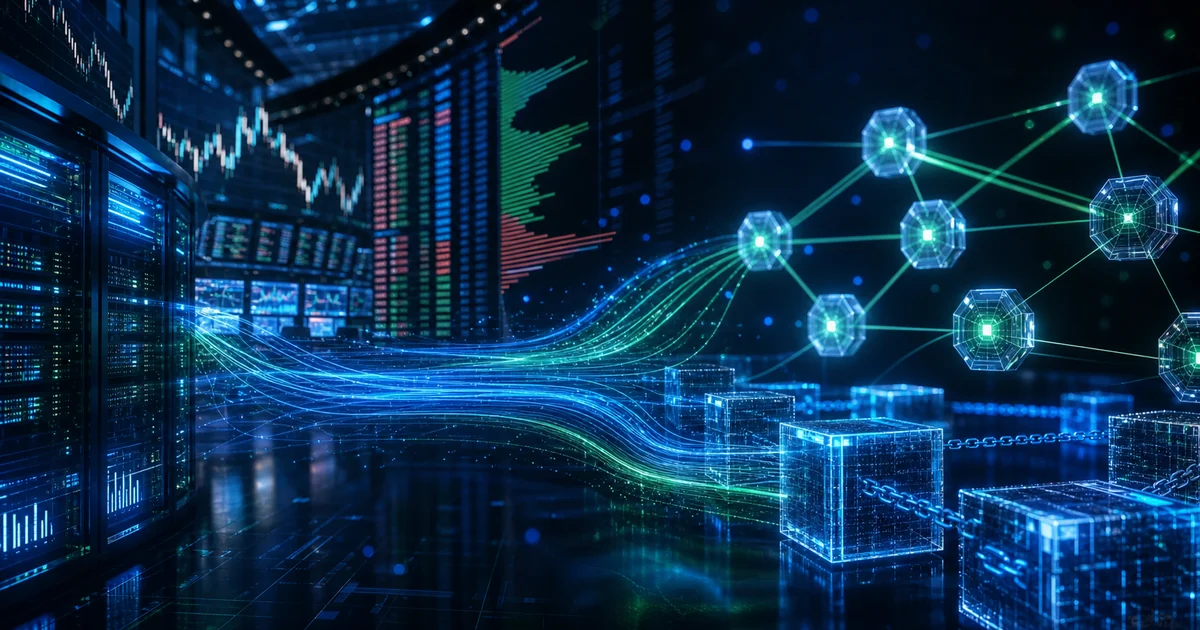
CoinDesk reported on June 30, 2026 that Nasdaq will distribute its TotalView market data through the Pyth Data Marketplace. The report says the product will be available through blockchain infrastructure, giving developers and institutional users another way to access a core Nasdaq data set.
The timing is why traders noticed it. CoinGecko's trending list placed Pyth Network among the most searched crypto assets, while PYTH traded near $0.040 with roughly $63.9 million in 24 hour volume and a gain of about 10% at the time checked.
This is not only about one token. It is about high quality market data becoming easier to plug into trading models, DeFi apps, and tokenized market infrastructure.
What Nasdaq TotalView means
TotalView is not a normal price ticker. It is a depth-of-book data product. Instead of only showing the last traded price, it shows buy and sell orders at multiple price levels. According to the CoinDesk report, it also includes Nasdaq's Net Order Imbalance Indicator, which helps read buying and selling pressure around opening and closing auctions.
For professional traders, that kind of data matters because liquidity is often more useful than the headline price. A market can look stable at the last trade while the order book underneath is thinning out. Depth data helps answer a more practical question: where is the real liquidity?
Why Pyth matters here
Pyth is built around first-party market data. Its own documentation describes price feeds sourced from more than 120 providers and verifiable across more than 100 blockchains. That makes Pyth different from a simple crypto chart site. It is an infrastructure layer used by builders that need market data inside applications.
Nasdaq using Pyth distribution does not mean every stock is suddenly trading onchain. It means the data layer is becoming more programmable. That is a quieter but important shift.
What traders should read from it
There are two separate readings.
- More institutional data can make Pyth more relevant to builders.
- Real market data improves the credibility of onchain finance experiments.
- Developer attention can keep PYTH in market conversation.
- Data partnerships do not automatically create token demand.
- Usage may take time to show up in real applications.
- Broader crypto weakness can overwhelm good project news.
The key is not to confuse attention with adoption. Trending search interest can move price in the short term, but the stronger signal is whether institutions and developers actually use the data.
The risks
The first risk is market timing. Bitcoin was trading near $58,000 during the same window, and fear sentiment remained extreme. In that environment, even strong project news can fade if the wider market sells risk assets.
The second risk is revenue capture. A network can become important infrastructure while the token still struggles if usage does not clearly translate into sustainable token value. Traders need to separate the quality of the product from the behavior of the token.
What to watch next
Watch three things. First, whether Pyth volume stays elevated after the headline cycle. Second, whether more institutional data providers join or expand feeds. Third, whether developers build real products around equity depth data rather than only talking about it.
Treat Nasdaq plus Pyth as a credibility signal, not a buy signal. Confirmation comes from usage, volume, and follow-through.