The Yen Carry Trade, Explained: Why Japan's Rate Hike Has Crypto on Edge

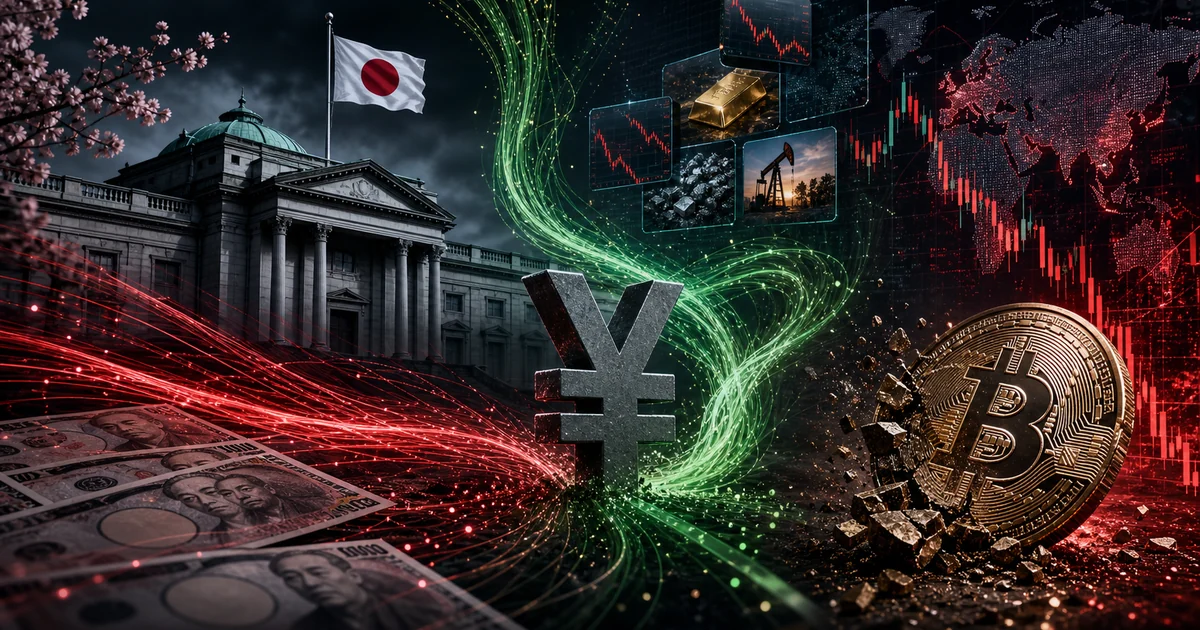
Diagram of the yen carry trade showing borrowed yen flowing into risk assets and reversing when Japan raises rates
Jun 15-16
BoJ Meeting
0.75% → 1.0%
Expected Rate
~30 yrs
Highest Since
~$63,500
BTC Price

This week has two central bank meetings, not one. Everyone is watching the Federal Reserve on Wednesday, which we covered in the dot plot preview. Far fewer people are watching the meeting that lands a day earlier, in Tokyo. That is a mistake, because the Bank of Japan has a habit of moving crypto harder than its size suggests, through a channel most traders have never had to think about: the yen carry trade.

If that phrase sounds like jargon you can skip, stay with me. It is one of the simplest ideas in global finance once you strip the name away, and it explains a surprising number of Bitcoin selloffs over the past two years.

What the Bank of Japan is about to do

According to reporting from the Japanese newspaper Nikkei, the Bank of Japan is leaning toward raising its benchmark interest rate from 0.75% to 1.0% at its June 15 to 16 meeting, as inflation pressure keeps building. That sounds tiny next to American rates near 3.75%. The catch is that for Japan, 1.0% would be the highest policy rate in nearly three decades. For an economy built on ultra-cheap money for a generation, that is a genuine shift, not a rounding error.

Japan was the last major holdout of near-zero interest rates. As that era ends, the effects ripple far beyond Tokyo, and crypto sits downstream of one of the biggest ripples.

The yen carry trade, in plain English

Here is the whole idea. For more than a decade, you could borrow Japanese yen at almost no interest. So large investors did exactly that. They borrowed cheap yen, converted it into dollars or other currencies, and put that money into anything that paid a better return: US stocks, government bonds, high-growth tech, and yes, crypto.

The profit is the gap. Borrow at nearly 0%, earn more somewhere else, and pocket the difference. As long as Japanese rates stay low and the yen stays weak, the trade prints money quietly in the background. Analysts estimate this has quietly funded risk appetite across global markets for years.

Borrow cheap money in Tokyo, invest it for a higher return somewhere else, keep the spread. That is the entire carry trade. Everything else is detail.

The problem is what happens in reverse. When Japan raises rates, or the yen strengthens, that cheap loan stops being cheap. Investors who borrowed yen now rush to buy yen back and repay before it costs them more. To raise that cash, they sell what they are holding. The unwind feeds on itself: selling pushes prices down, which forces more selling, which strengthens the yen further.

Why crypto sits in the crosshairs

When a carry trade unwinds, not everything gets sold at the same speed. Traders sell what is easiest to sell first, and crypto is close to the top of that list. It trades 24 hours a day, seven days a week, and it can be liquidated instantly without waiting for a market to open. When someone in Tokyo needs cash on a Monday morning, Bitcoin is right there, always open.

That is why a Japanese policy decision can hit a Bitcoin chart within hours. It is not that crypto suddenly became more Japanese. It is that crypto is the most convenient thing to sell when global liquidity tightens.

What history actually shows

This is not theory. The market has run this experiment several times.

  • August 2024: a sharp yen carry unwind was widely blamed as Bitcoin fell from around $65,000 to near $50,000 over a single week, according to reporting at the time.
  • January 2026: when the Bank of Japan raised rates to 0.75%, Bitcoin fell roughly 3% within hours of the announcement as traders adjusted.
  • The wider pattern: several of the past Bank of Japan tightening steps have coincided with selloffs in global risk assets, which is exactly why this meeting is on every macro desk's calendar.

There is also a positioning risk this time. Speculative bets against the yen have piled up, with leveraged funds holding more than 115,000 short yen contracts as of recent CFTC data, among the highest in years. If the Bank of Japan sounds more hawkish than expected, those shorts can be squeezed, forcing a faster unwind and a sharper move.

The honest counterargument

Now the part that keeps this from being a scare story. Not everyone buys the carry-unwind panic, and the skeptics have a real case.

First, the hike is widely expected, so much of it may already be priced in. A move the whole market sees coming rarely delivers the full shock that a surprise would. Second, and more interesting, some analysts argue the carry-unwind narrative is overblown. The team at LondonCryptoClub has pointed out that Japanese institutions kept increasing their holdings of US assets right through this tightening, with Japan's stockpile of US Treasuries climbing to multi-year highs. Their blunt take is that people who keep predicting a yen carry unwind do not understand how Japanese investors actually operate.

Hold both ideas

The carry trade is a real transmission channel that has moved crypto before. It is also a narrative that gets overhyped before every Bank of Japan meeting. Both are true. The decision and the guidance that follows are what decide which story wins this time.

What to watch on the day

You do not need to forecast Japanese monetary policy. You need a short list for when the decision lands:

  1. The hike itself, and the tone. A 1.0% rate with calm, dovish guidance is very different from the same rate with a warning that more hikes are coming.
  2. Bond purchase plans. Reports suggest the Bank may pause its planned reduction of bond buying, which would soften the liquidity hit. That detail matters.
  3. The yen and USD/JPY. A sharp move in the yen is the clearest sign a carry unwind is actually starting, rather than just being feared.
  4. Whether volume confirms any move. A drop on thin volume is noise. A drop on heavy, sustained selling volume across exchanges is the real thing.

Key levels are worth keeping in view too. Bitcoin trades near $63,500 going in. Analysts flag a daily close below $63,000 as opening the door toward the $60,000 support band that we discussed during the CPI battle, with the broader $60,000 zone the line that has defined this whole stretch.

How to use this as a signal

A feared macro event is exactly the kind of moment where watching volume beats watching headlines. The fear of a carry unwind is everywhere right now. Whether it actually arrives will show up as real selling pressure, and that lands in the flow before it lands in a clean trend on the chart. If the dreaded unwind is real, you see sustained sell volume building across exchanges. If it is just another overhyped Bank of Japan week, the feared drop comes on thin volume and gets bought back. That difference is the gap our guide on why volume moves before price walks through, and it is what CryptoFlow is built to surface.

Watch the unwind in real time, if it comes

CryptoFlow tracks real buying and selling volume across five major exchanges every minute. When a macro shock hits, the volume tells you whether the move is real before the chart does.

Open the Dashboard →

The bottom line

The Bank of Japan meeting is the quiet half of a loud week. A hike to 1.0% would be Japan's highest rate in nearly thirty years, and the yen carry trade is the wire that connects that decision to a Bitcoin chart. History says the channel is real. The skeptics say the panic is overdone. Both can be right, which is why the guidance and the yen reaction matter more than the number itself. Watch the yen, watch the volume, and remember that the Fed lands the very next day. This is a week to read the tape closely, not to trade the headline.

Frequently asked questions

What is the yen carry trade?
It is a strategy where investors borrow Japanese yen at very low interest rates, convert it into other currencies, and invest in higher-yielding assets such as stocks or crypto. The profit is the gap between Japan's cheap borrowing cost and the higher return elsewhere. The trade unwinds when the yen strengthens or Japanese rates rise.
Why does a Bank of Japan rate hike affect Bitcoin?
Higher Japanese rates can trigger an unwinding of the carry trade. As traders buy back yen to repay loans, liquidity is pulled out of global markets. Crypto is often sold early because it trades 24 hours a day and can be liquidated immediately.
How much is the Bank of Japan expected to raise rates?
Reports indicate the Bank is leaning toward raising its benchmark rate from 0.75% to 1.0% at its June 15 to 16 meeting, which would be the highest level in nearly three decades.
Has a Bank of Japan hike hurt Bitcoin before?
Yes. After the Bank raised rates to 0.75% in January 2026, Bitcoin fell roughly 3% within hours. The larger carry unwind in August 2024 saw Bitcoin drop sharply over a single week. Past Japanese tightening has often coincided with risk-asset selloffs.
Is the rate hike already priced in?
Markets place high odds on the hike, so much may already be priced in. Guidance on future hikes and bond purchases can matter as much as the decision, and some analysts argue the carry-unwind risk is overstated because Japanese institutions kept buying foreign assets through the tightening.
This article is for informational and educational purposes only and does not constitute financial advice. Cryptocurrency is highly volatile. Never invest more than you can afford to lose, and always do your own research. Rates, levels, and figures cited reflect reporting around June 16, 2026 and will change.

شرح صفقات المناقلة بالين: لماذا يضع رفع فائدة اليابان الكريبتو على حافة التوتر

رسم لصفقة المناقلة بالين يوضح تدفق الين المقترض نحو الأصول الخطرة وانعكاسه عند رفع اليابان للفائدة
15-16 يونيو
اجتماع بنك اليابان
0.75% ← 1.0%
الفائدة المتوقعة
~30 سنة
الأعلى منذ
~$63,500
سعر BTC

هذا الأسبوع فيه اجتماعان لبنكين مركزيين، لا واحد. الجميع يراقب الاحتياطي الفيدرالي يوم الأربعاء، وهو ما غطيناه في معاينة مخطط النقاط. وعدد أقل بكثير يراقب الاجتماع الذي يسبقه بيوم، في طوكيو. وهذا خطأ، لأن بنك اليابان معتاد على تحريك الكريبتو أقوى مما يوحيه حجمه، عبر قناة لم يضطر معظم المتداولين للتفكير فيها يوماً: صفقات المناقلة بالين (Yen Carry Trade).

إذا بدت لك هذه العبارة مصطلحاً يمكنك تخطّيه، ابقَ معي. إنها من أبسط الأفكار في التمويل العالمي حين تنزع عنها الاسم، وتفسّر عدداً مفاجئاً من موجات بيع البيتكوين خلال العامين الماضيين.

ما الذي يوشك بنك اليابان على فعله

وفق تقارير صحيفة نيكاي اليابانية، يميل بنك اليابان لرفع فائدته المرجعية من 0.75% إلى 1.0% في اجتماعه يومي 15-16 يونيو، مع استمرار تصاعد ضغوط التضخم. يبدو هذا ضئيلاً بجانب الفائدة الأمريكية قرب 3.75%. لكن المفارقة أن 1.0% ستكون لليابان أعلى فائدة سياسية منذ نحو ثلاثة عقود. ولاقتصاد بُني على مال رخيص للغاية طوال جيل، هذا تحوّل حقيقي لا رقم هامشي.

كانت اليابان آخر معاقل الفائدة شبه الصفرية بين الاقتصادات الكبرى. ومع انتهاء ذلك العصر، تمتد آثاره أبعد من طوكيو بكثير، والكريبتو يقع في مجرى واحدة من أكبر تلك التموّجات.

صفقة المناقلة بالين بلغة بسيطة

إليك الفكرة كاملة. لأكثر من عقد، كان بإمكانك اقتراض الين الياباني بفائدة شبه معدومة. فعل كبار المستثمرين ذلك بالضبط. اقترضوا ين رخيص، حوّلوه إلى دولارات أو عملات أخرى، ووضعوا ذلك المال في أي شيء يدفع عائداً أفضل: أسهم أمريكية، سندات حكومية، شركات تقنية عالية النمو، ونعم، الكريبتو.

الربح هو الفارق. اقترض بنحو 0%، اربح أكثر في مكان آخر، واحتفظ بالفرق. وما دامت فائدة اليابان منخفضة والين ضعيفاً، تطبع الصفقة المال بهدوء في الخلفية. ويقدّر المحللون أن هذا موّل شهية المخاطرة عبر الأسواق العالمية لسنوات.

اقترض مالاً رخيصاً في طوكيو، استثمره بعائد أعلى في مكان آخر، واحتفظ بالفارق. تلك هي صفقة المناقلة بأكملها. وكل ما عداها تفاصيل.

المشكلة في ما يحدث عكسياً. حين ترفع اليابان الفائدة، أو يقوى الين، يتوقف ذلك القرض الرخيص عن كونه رخيصاً. والمستثمرون الذين اقترضوا الين يهرعون الآن لشرائه وسداد قروضهم قبل أن تكلّفهم أكثر. ولتدبير ذلك النقد، يبيعون ما يملكونه. والانعكاس يتغذّى على نفسه: البيع يدفع الأسعار للهبوط، ما يفرض مزيداً من البيع، ما يقوّي الين أكثر.

لماذا يقع الكريبتو في مرمى النيران

حين تنعكس صفقة مناقلة، لا يُباع كل شيء بالسرعة نفسها. يبيع المتداولون الأسهل بيعاً أولاً، والكريبتو قرب رأس تلك القائمة. يُتداول 24 ساعة في اليوم، سبعة أيام في الأسبوع، ويمكن تسييله فوراً دون انتظار فتح سوق. وحين يحتاج أحدهم في طوكيو نقداً صباح الاثنين، يكون البيتكوين هناك، مفتوحاً دائماً.

لهذا يمكن لقرار سياسي ياباني أن يضرب رسم البيتكوين خلال ساعات. ليس لأن الكريبتو صار فجأة أكثر يابانية. بل لأن الكريبتو هو الأسهل بيعاً حين تتشدّد السيولة العالمية.

ما الذي يُظهره التاريخ فعلاً

هذه ليست نظرية. أجرى السوق هذه التجربة عدة مرات.

  • أغسطس 2024: أُلقي اللوم على انعكاس حاد لمناقلة الين على نطاق واسع حين هبط البيتكوين من نحو 65,000 دولار إلى قرب 50,000 خلال أسبوع واحد، بحسب تقارير ذلك الوقت.
  • يناير 2026: حين رفع بنك اليابان الفائدة إلى 0.75%، هبط البيتكوين نحو 3% خلال ساعات من الإعلان مع تكيّف المتداولين.
  • النمط الأوسع: تزامن عدد من خطوات تشديد بنك اليابان السابقة مع موجات بيع في الأصول الخطرة عالمياً، وهذا بالضبط سبب وجود هذا الاجتماع على أجندة كل مكتب اقتصاد كلي.

وهناك خطر تموضع هذه المرة أيضاً. تراكمت الرهانات المضاربية ضد الين، إذ تحتفظ الصناديق ذات الرافعة بأكثر من 115,000 عقد بيع على الين بحسب بيانات CFTC الأخيرة، من بين الأعلى منذ سنوات. وإذا بدا بنك اليابان أكثر تشدداً من المتوقع، يمكن الضغط على تلك المراكز القصيرة، ما يفرض انعكاساً أسرع وحركة أحدّ.

الحجة المقابلة الصادقة

الآن الجزء الذي يمنع هذا من أن يكون قصة تخويف. ليس الجميع يصدّق ذعر انعكاس المناقلة، وللمشكّكين حجة حقيقية.

أولاً، الرفع متوقَّع على نطاق واسع، فقد يكون جزء كبير منه مُسعّراً سلفاً. والحركة التي يراها السوق كله قادمة نادراً ما تحقّق الصدمة الكاملة التي تحقّقها المفاجأة. ثانياً، والأكثر إثارة، يجادل بعض المحللين بأن سردية انعكاس المناقلة مبالغ فيها. أشار فريق LondonCryptoClub إلى أن المؤسسات اليابانية واصلت زيادة حيازاتها من الأصول الأمريكية طوال هذا التشديد، مع صعود مخزون اليابان من سندات الخزانة الأمريكية لأعلى مستوياته منذ سنوات. ورأيهم الصريح أن من يواصلون توقّع انعكاس مناقلة الين لا يفهمون كيف يعمل المستثمرون اليابانيون فعلاً.

احمل الفكرتين معاً

صفقة المناقلة قناة انتقال حقيقية حرّكت الكريبتو من قبل. وهي أيضاً سردية يُبالَغ فيها قبل كل اجتماع لبنك اليابان. كلاهما صحيح. والقرار والتوجيه الذي يتبعه هما ما يحدّد أي قصة تفوز هذه المرة.

ما الذي تراقبه في اليوم

لا تحتاج للتنبؤ بالسياسة النقدية اليابانية. تحتاج قائمة قصيرة لحظة صدور القرار:

  1. الرفع نفسه، والنبرة. فائدة 1.0% مع توجيه هادئ وتيسيري تختلف تماماً عن الفائدة نفسها مع تحذير بأن مزيداً من الرفع قادم.
  2. خطط شراء السندات. تشير التقارير إلى أن البنك قد يوقف تقليصه المخطط لشراء السندات، ما يخفّف ضربة السيولة. تلك تفصيلة مهمة.
  3. الين وزوج USD/JPY. حركة حادة في الين هي أوضح إشارة لأن انعكاس المناقلة يبدأ فعلاً، لا أنه مجرد مخوف منه.
  4. هل يؤكّد الحجم أي حركة. هبوط على حجم ضعيف ضوضاء. وهبوط على حجم بيع ثقيل ومستدام عبر المنصات هو الشيء الحقيقي.

تستحق المستويات المهمة المتابعة أيضاً. يتداول البيتكوين قرب 63,500 دولار قبل القرار. ويشير المحللون إلى أن إغلاقاً يومياً تحت 63,000 دولار يفتح الباب نحو نطاق دعم الـ 60,000 الذي ناقشناه خلال معركة التضخم، مع كون منطقة 60,000 الخط الذي عرّف هذه المرحلة كلها.

كيف تستخدم هذا كإشارة

الحدث الاقتصادي المخوف منه هو بالضبط نوع اللحظة التي تتفوق فيها مراقبة الحجم على مراقبة العناوين. الخوف من انعكاس المناقلة في كل مكان الآن. وما إذا كان سيصل فعلاً سيظهر كضغط بيع حقيقي، وذلك يحطّ في التدفق قبل أن يحطّ كاتجاه واضح على الرسم. إذا كان الانعكاس المرهوب حقيقياً، ترى حجم بيع مستداماً يتراكم عبر المنصات. وإذا كان مجرد أسبوع آخر مبالغ فيه لبنك اليابان، يأتي الهبوط المخوف على حجم ضعيف ويُعاد شراؤه. ذلك الفرق يشرحه دليلنا عن لماذا يتحرك الحجم قبل السعر، وهو ما بُني CryptoFlow لإظهاره.

راقب الانعكاس في الزمن الحقيقي، إن جاء

يتتبّع CryptoFlow حجم الشراء والبيع الحقيقي عبر خمس منصات كبرى كل دقيقة. حين تضرب صدمة اقتصادية، الحجم يخبرك إن كانت الحركة حقيقية قبل أن يخبرك الرسم.

افتح لوحة التحكم ←

الخلاصة

اجتماع بنك اليابان هو النصف الهادئ من أسبوع صاخب. رفع إلى 1.0% سيكون أعلى فائدة لليابان منذ نحو ثلاثين عاماً، وصفقة المناقلة بالين هي السلك الذي يربط ذلك القرار برسم البيتكوين. التاريخ يقول إن القناة حقيقية. والمشكّكون يقولون إن الذعر مبالغ فيه. وكلاهما قد يكون محقاً، ولهذا فالتوجيه ورد فعل الين أهم من الرقم نفسه. راقب الين، راقب الحجم، وتذكّر أن الفيدرالي يحطّ في اليوم التالي مباشرة. هذا أسبوع لقراءة الشريط عن قرب، لا للتداول على العنوان.

أسئلة شائعة

ما هي صفقة المناقلة بالين (Yen Carry Trade)؟
هي استراتيجية يقترض فيها المستثمرون الين الياباني بفائدة منخفضة جداً، يحوّلونه لعملات أخرى، ويستثمرونه في أصول ذات عائد أعلى كالأسهم أو الكريبتو. الربح هو الفارق بين تكلفة الاقتراض الرخيصة في اليابان والعائد الأعلى في مكان آخر. وتنعكس الصفقة حين يقوى الين أو ترتفع الفائدة اليابانية.
لماذا يؤثر رفع فائدة بنك اليابان على البيتكوين؟
الفائدة اليابانية الأعلى قد تطلق انعكاساً لصفقة المناقلة. ومع شراء المتداولين الين لسداد قروضهم، تُسحب السيولة من الأسواق العالمية. والكريبتو يُباع مبكراً غالباً لأنه يُتداول 24 ساعة ويمكن تسييله فوراً.
كم يُتوقع أن يرفع بنك اليابان الفائدة؟
تشير التقارير إلى أن البنك يميل لرفع فائدته المرجعية من 0.75% إلى 1.0% في اجتماعه يومي 15-16 يونيو، ما سيكون أعلى مستوى منذ نحو ثلاثة عقود.
هل أضرّ رفع بنك اليابان بالبيتكوين من قبل؟
نعم. بعد رفع البنك الفائدة إلى 0.75% في يناير 2026، هبط البيتكوين نحو 3% خلال ساعات. والانعكاس الأكبر في أغسطس 2024 شهد هبوطاً حاداً للبيتكوين خلال أسبوع واحد. وتزامن التشديد الياباني السابق غالباً مع موجات بيع في الأصول الخطرة.
هل رفع الفائدة مُسعّر سلفاً؟
تضع الأسواق احتمالات عالية للرفع، فقد يكون جزء كبير منه مُسعّراً سلفاً. والتوجيه حول الرفع المستقبلي وشراء السندات قد يهم بقدر القرار نفسه، ويجادل بعض المحللين بأن خطر انعكاس المناقلة مبالغ فيه لأن المؤسسات اليابانية واصلت شراء الأصول الأجنبية خلال التشديد.
هذا المقال لأغراض إعلامية وتعليمية فقط ولا يشكّل نصيحة مالية. العملات الرقمية شديدة التقلب. لا تستثمر أبداً أكثر مما تتحمّل خسارته، وقم دائماً ببحثك الخاص. الفوائد والمستويات والأرقام المذكورة تعكس تقارير حول 16 يونيو 2026 وستتغيّر.

These links are included so readers can verify the market data, definitions, and official references behind the article.

أُضيفت هذه الروابط حتى يستطيع القارئ التحقق من بيانات السوق، والتعريفات، والمراجع الرسمية المرتبطة بالمقال.