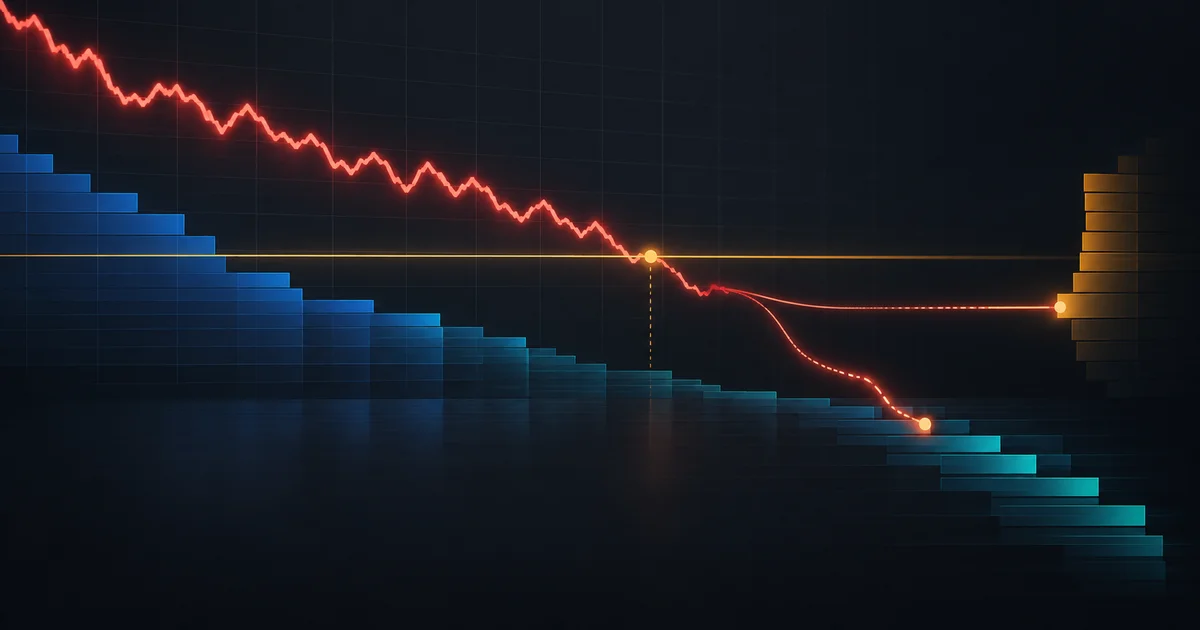
What is a stop loss?ما هو وقف الخسارة؟
A stop loss is an exit instruction that becomes active when a specified trigger condition is met. For an asset you already own, it usually means a conditional sell below the current market. Three numbers deserve separate boxes on your worksheet: the entry price, the stop or trigger price, and the actual average fill price. They serve different purposes.
Under the usual stop-market structure, reaching the stop activates a market order. Under stop-limit, it activates a limit order. The trigger starts the next step; it does not reserve a buyer at that price. Binance describes these as STOP_LOSS and STOP_LOSS_LIMIT in its Spot API material. Names and availability differ across products and interfaces, so verify the order description on the exact market you use. [1]
وقف الخسارة تعليمات للخروج تصبح نشطة عند تحقق شرط تفعيل محدد. ولعملة تملكها بالفعل، يكون عادة أمر بيع مشروطًا تحت سعر السوق الحالي. افصل بين ثلاثة أرقام في خطتك: سعر الدخول، وسعر الوقف أو التفعيل، ومتوسط سعر التنفيذ الفعلي. لكل منها وظيفة مختلفة.
في البنية المعتادة لأمر Stop Market، يؤدي بلوغ الوقف إلى تفعيل أمر سوق. أما Stop Limit فيفعّل أمرًا محدد السعر. التفعيل يبدأ الخطوة التالية؛ ولا يحجز مشتريًا عند ذلك السعر. تستخدم وثائق Binance للتداول الفوري اسمي STOP_LOSS وSTOP_LOSS_LIMIT. وتختلف الأسماء والإتاحة بين المنتجات والواجهات، لذلك اقرأ وصف الأمر في السوق الذي تستخدمه تحديدًا. [1]
Stop Market vs Stop Limit: the practical differenceالفرق العملي بين Stop Market وStop Limit
| Question | Stop Market | Stop Limit |
|---|---|---|
| After the trigger? | Market sell | Limit sell |
| Execution price? | Available bids, potentially several prices | Limit price or higher |
| Main trade-off? | Accept an uncertain exit price | Accept possible non-execution |
| Can a remainder exist? | Yes, depending on liquidity and venue protections | Yes, if too little demand meets the limit |
A market order prioritizes immediate matching, but “market” is not a universal promise of a complete fill under every condition. Coinbase explicitly documents multiple-price fills and market-protection mechanisms that can leave a partial fill. A sell limit sets a floor for the execution price, before fees, rather than a maximum account loss. If the order remains open while the asset falls, the unsold units still carry risk. [2]
| السؤال | Stop Market | Stop Limit |
|---|---|---|
| ماذا يحدث بعد التفعيل؟ | بيع بسعر السوق | بيع بسعر محدد |
| أين ينفذ؟ | عند طلبات الشراء المتاحة، وقد تتعدد الأسعار | عند سعر الحد أو أعلى منه |
| ما المقايضة الأساسية؟ | قبول سعر خروج غير مؤكد | قبول احتمال عدم التنفيذ |
| هل قد تبقى كمية؟ | نعم، حسب السيولة وضوابط المنصة | نعم، إذا لم تكفِ طلبات الشراء المناسبة |
يعطي أمر السوق الأولوية للمطابقة الفورية، لكن كلمة «سوق» ليست وعدًا بالتنفيذ الكامل في كل الظروف. توثّق Coinbase التنفيذ على أسعار متعددة وضوابط لحماية السوق قد تترك تنفيذًا جزئيًا. ويضع أمر البيع المحدد حدًا أدنى لسعر التنفيذ قبل الرسوم، ولا يضع سقفًا لخسارة الحساب. إذا بقي الأمر مفتوحًا بينما هبط الأصل، تظل الكمية غير المباعة معرضة للخسارة. [2]
One price drop, two different outcomesهبوط واحد ونتيجتان مختلفتان
This is a hypothetical order book, not historical market data. You hold 10 units bought at $100 each. Your sell stop is $95. For the stop-limit version, your limit is $94.50 and the order remains active until canceled. After the trigger, assume the only immediately available bids are 4 units at $94 and 6 at $93.80. Assume a functioning exchange, no additional restrictions, and no fees for this first calculation.
- Stop Market: 4 × $94 + 6 × $93.80 = $938.80 proceeds. Divide by 10 to obtain an average fill of $93.88. Against the $1,000 entry cost, the loss is $61.20.
- Stop Limit: neither bid meets the $94.50 minimum. Nothing sells in this snapshot. You retain all 10 units and an open limit sell. A later rebound might fill it, but a continued fall might not.
The planned loss at exactly $95 was $50. The market-order example loses $11.20 more before fees. The limit-order example has no realized sale loss yet; that does not make its economic loss zero. It still holds the asset. If only 3 units later find buyers at $94.50, 7 remain exposed.
Moving the sell limit to $93.80 would make both displayed bid levels eligible in this simplified snapshot. That changes the trade-off rather than solving it: you accept a lower minimum price, and bids can still disappear before matching. No fixed gap between the stop and limit guarantees an exit.
هذا دفتر أوامر افتراضي للتعليم، وليس بيانات سوق تاريخية. تملك 10 وحدات اشتريتها بسعر 100 دولار للوحدة. وقف البيع عند 95 دولارًا. وفي نسخة Stop Limit، سعر الحد 94.50 دولارًا، والأمر صالح حتى إلغائه. بعد التفعيل، نفترض أن طلبات الشراء المتاحة فورًا هي 4 وحدات عند 94 دولارًا و6 وحدات عند 93.80 دولارًا فقط. ونفترض أن المنصة تعمل دون قيود إضافية، مع تجاهل الرسوم في هذا الحساب الأول.
- Stop Market: حصيلة البيع هي 4 × 94 + 6 × 93.80 = 938.80 دولارًا. بقسمتها على 10، يصبح متوسط التنفيذ 93.88 دولارًا. مقابل تكلفة دخول 1,000 دولار، تبلغ الخسارة 61.20 دولارًا.
- Stop Limit: لا يحقق أي طلب شراء الحد الأدنى البالغ 94.50 دولارًا. لا تباع أي وحدة في هذه اللقطة. تبقى الوحدات العشر لديك وأمر البيع مفتوحًا. قد يسمح ارتداد لاحق بالتنفيذ، وقد يمنعه استمرار الهبوط.
الخسارة المخططة عند تنفيذ كامل بسعر 95 دولارًا كانت 50 دولارًا. خسر مثال أمر السوق 11.20 دولارًا إضافية قبل الرسوم. أما مثال أمر الحد فلم يحقق خسارة بيع بعد؛ وهذا لا يجعل خسارته الاقتصادية صفرًا، لأنه ما زال يحتفظ بالأصل. وإذا وجد لاحقًا مشترين لثلاث وحدات فقط عند 94.50 دولارًا، تبقى سبع وحدات معرضة لحركة السعر.
خفض حد البيع إلى 93.80 دولارًا يجعل مستويي الشراء الظاهرين مناسبين في هذه اللقطة المبسطة. لكنه يغير المقايضة ولا يلغيها: تقبل حدًا أدنى أقل، وقد تختفي الطلبات قبل المطابقة. لا توجد مسافة ثابتة بين الوقف والحد تضمن الخروج.
Why your stop price differs from your fillلماذا يختلف سعر الوقف عن سعر التنفيذ؟
Slippage is the difference between an expected execution price and the actual result. A moving market and insufficient quantity at the best bid can both contribute. A seller consumes bids, not the last price printed on a chart. A chart can show $95 while the bids available to your order are lower. Spread and order-book depth therefore matter alongside the trigger. [3]
In the example, adverse slippage relative to the stop is ($95 − $93.88) ÷ $95 × 100 = about 1.18%. That is not the total trade loss, which is 6.12% of the $100 entry before fees. Keeping those denominators separate prevents a small-looking execution percentage from hiding a larger investment loss.
Our trading volume guide explains what turnover measures. A large 24-hour volume number alone cannot tell you how much demand is available at your intended exit at this instant. Likewise, a positive buy-share reading on a dashboard does not guarantee liquidity for your own order.
الانزلاق السعري هو الفرق بين سعر التنفيذ المتوقع والنتيجة الفعلية. قد ينتج عن حركة السوق أو عدم كفاية الكمية عند أفضل طلب شراء. البائع ينفذ مقابل طلبات الشراء، وليس مقابل آخر سعر طُبع على الرسم. قد يظهر السعر 95 دولارًا بينما تكون الطلبات المتاحة لأمرك أقل. لذلك تهم فجوة العرض والطلب وعمق الدفتر إلى جانب سعر التفعيل. [3]
في المثال، الانزلاق السلبي مقارنة بالوقف يساوي (95 − 93.88) ÷ 95 × 100 = نحو 1.18%. وهذه ليست خسارة الصفقة الكلية، التي تبلغ 6.12% من سعر الدخول 100 دولار قبل الرسوم. فصل المقامين يمنع نسبة تنفيذ صغيرة ظاهريًا من إخفاء خسارة استثمارية أكبر.
يوضح دليل حجم التداول ما يقيسه نشاط التداول. لا يخبرك حجم كبير خلال 24 ساعة وحده بمقدار الطلب المتاح عند مخرجك المطلوب في هذه اللحظة. كذلك لا تضمن قراءة إيجابية لحصة الشراء في لوحة البيانات سيولة كافية لأمرك أنت.
How to calculate position size from a loss budgetكيف تحسب حجم الصفقة من ميزانية الخسارة؟
Use this arithmetic as a planning exercise, not as a recommended risk percentage. Suppose a hypothetical $1,000 account allocates a $10 loss budget to one unleveraged trade. Entry is $100 and the planned exit is $95. Before costs, the estimated quantity is:
Quantity = loss budget ÷ (entry − planned exit)
10 ÷ (100 − 95) = 2 units
Two units cost $200. The account balance is not the position value, and the $10 budget is not the amount invested. If the same two units exit at $93.88 instead, the loss becomes $12.24 before fees. A budget is a scenario assumption, not an exchange-enforced ceiling.
Now reserve a hypothetical $0.20 per unit for combined entry/exit costs and slippage. The estimate becomes 10 ÷ (5 + 0.20) = 1.923076 units. If the pair only permits steps of 0.01, rounding down gives 1.92 units, costing $192 before entry fees, and a modeled loss of $9.984. The allowance is invented for this exercise, not a fee quote or a forecast of worst-case slippage. A worse fill can exceed it.
Also cap quantity by available buying power, allow for entry fees, and check minimum order value and quantity increments. Binance publishes separate price, lot-size and notional filters; precision that looks valid in a calculator can still be rejected by a trading pair. [4]
استخدم الحساب التالي للتعلم، لا باعتباره نسبة مخاطرة موصى بها. لنفترض أن حسابًا افتراضيًا قيمته 1,000 دولار يخصص ميزانية خسارة قدرها 10 دولارات لصفقة واحدة دون رافعة. الدخول عند 100 دولار والخروج المخطط عند 95 دولارًا. قبل التكاليف، تكون الكمية المقدرة:
الكمية = ميزانية الخسارة ÷ (الدخول − الخروج المخطط)
10 ÷ (100 − 95) = 2 وحدتين
تكلف الوحدتان 200 دولار. رصيد الحساب ليس قيمة الصفقة، وميزانية الخسارة البالغة 10 دولارات ليست المبلغ المستثمر. وإذا خرجت الوحدتان نفسيهما عند 93.88 دولارًا، تصبح الخسارة 12.24 دولارًا قبل الرسوم. الميزانية افتراض تخطيطي، وليست سقفًا تفرضه المنصة.
لنخصص الآن 0.20 دولار افتراضيًا لكل وحدة لتغطية مجموع تكاليف الدخول والخروج والانزلاق. يصبح التقدير 10 ÷ (5 + 0.20) = 1.923076 وحدة. وإذا كان الزوج يسمح بخطوات كمية مقدارها 0.01 فقط، فإن التقريب إلى الأسفل يعطي 1.92 وحدة، بتكلفة 192 دولارًا قبل رسوم الدخول وخسارة مقدرة 9.984 دولار. هذا المخصص مفترض للتمرين، وليس تسعيرة رسوم ولا توقعًا لأسوأ انزلاق. يمكن لتنفيذ أسوأ أن يتجاوزه.
قيّد الكمية أيضًا بالرصيد المتاح للشراء، واحتسب رسوم الدخول، وافحص الحد الأدنى لقيمة الأمر وخطوة الكمية. تنشر Binance مرشحات منفصلة للسعر والكمية والقيمة؛ وقد يرفض الزوج دقة عشرية تبدو صحيحة في الآلة الحاسبة. [4]
My stop loss did not work: what to checkلم يعمل وقف الخسارة: ماذا أفحص؟
- Was it accepted? Look for an order identifier and status, not just values left in a form. Record a rejection message before changing parameters.
- Did the trigger occur on the configured price source? Confirm the pair and market. A screenshot from a different exchange is not evidence that this order triggered.
- Was it triggered but still open? A stop-limit can become a live limit without finding an eligible buyer.
- Was it partially filled? Read executed quantity, remaining quantity, average fill and fees. One fill notification does not prove the entire position closed.
- Did another action cancel or replace it? Check order history, linked orders and expiration. For OCO, one-cancels-the-other links two order legs; do not assume independent protection after the other leg changes state. [5]
A useful journal row contains: order ID, market, side, quantity, trigger source, stop, limit if applicable, status, executed quantity, average fill and fees. That record distinguishes a trigger problem from a liquidity problem. Never publish credentials or API secrets with a support screenshot.
- هل قُبل الأمر؟ ابحث عن معرّف الأمر وحالته، لا عن أرقام ما زالت في نموذج الإدخال. احتفظ برسالة الرفض قبل تغيير المعلمات.
- هل تحقق الشرط على مصدر السعر المحدد؟ تأكد من الزوج والسوق. صورة من منصة مختلفة لا تثبت أن هذا الأمر تفعّل.
- هل تفعّل لكنه بقي مفتوحًا؟ قد يتحول Stop Limit إلى أمر حد نشط دون العثور على مشترٍ مناسب.
- هل نُفذ جزئيًا؟ اقرأ الكمية المنفذة والمتبقية ومتوسط التنفيذ والرسوم. إشعار تنفيذ واحد لا يثبت إغلاق المركز كاملًا.
- هل ألغاه إجراء آخر أو استبدله؟ راجع السجل والأوامر المرتبطة والصلاحية. يربط OCO بين طرفين بحيث يلغي أحدهما الآخر؛ فلا تفترض بقاء حماية مستقلة بعد تغير حالة الطرف الآخر. [5]
يتضمن سجل مفيد: معرّف الأمر، والسوق، والاتجاه، والكمية، ومصدر التفعيل، والوقف، والحد إن وجد، والحالة، والكمية المنفذة، ومتوسط التنفيذ، والرسوم. يميز هذا السجل مشكلة التفعيل من مشكلة السيولة. لا تنشر بيانات الدخول أو أسرار API مع صورة ترسلها للدعم.
Why futures add a separate liquidation riskلماذا تضيف العقود الآجلة خطر تصفية مستقلًا؟
The examples above concern selling an owned asset without leverage. Futures add a liquidation mechanism. On Binance Futures, liquidation uses the mark price, while a stop can use a different selected trigger source such as the last price. The mark can reach liquidation before a last-price stop fires. Placing a stop very close to liquidation is therefore not a dependable buffer. [6]
Price-protection settings can also prevent a conditional order from triggering when the difference between mark and last price exceeds the relevant threshold. Read the contract's current rules; do not assume a feature called “protection” guarantees an earlier exit. [7] Our liquidation guide covers the broader mechanism. Margin, collateral changes and funding are outside the simple spot sizing example here.
تتناول الأمثلة السابقة بيع أصل مملوك دون رافعة. تضيف العقود الآجلة آلية تصفية. في عقود Binance الآجلة، تعتمد التصفية على السعر المرجعي Mark Price، بينما قد يستخدم الوقف مصدر تفعيل مختلفًا مثل آخر سعر Last Price. قد يبلغ السعر المرجعي مستوى التصفية قبل تفعيل وقف يعتمد على آخر سعر. لذلك لا يمثل وقف قريب جدًا من التصفية هامشًا يعتمد عليه. [6]
وقد تمنع إعدادات حماية السعر تفعيل أمر مشروط عندما يتجاوز الفرق بين السعر المرجعي وآخر سعر العتبة المعنية. اقرأ قواعد العقد الحالية؛ ولا تفترض أن ميزة اسمها «حماية» تضمن خروجًا أبكر. [7] يشرح دليل التصفية الآلية الأوسع. أما الهامش وتغير الضمان ورسوم التمويل فخارج مثال حساب الكمية الفوري المبسط هنا.
A five-line exit plan you can actually reviewخطة خروج من خمسة أسطر يمكن مراجعتها
Before considering a real order, complete this exercise on paper or a simulator: “I own ___ units. My trigger is ___ on ___ price source. After triggering, the order becomes ___. If only part fills, the remaining exposure is ___. I will verify completion using ___.” If any blank is unclear, the order name alone has not explained the risk.
For the ten-unit example, write down both outcomes before choosing a hypothetical order: accept a worse immediate execution price, or retain units if the minimum sell price cannot be met. Then stress the assumptions. What if the bid falls another dollar? What if only half the quantity fills? What if a fee reduces the quantity available to sell? These questions make an exit plan more useful than choosing a round percentage and calling it safe.
There is no universal stop distance that suits every asset, time horizon and market. This lesson explains order behavior and arithmetic. It does not select an entry, recommend leverage, or predict where an asset will trade.
قبل التفكير في أمر حقيقي، أكمل هذا التمرين على الورق أو في محاكاة: «أملك ___ وحدة. سعر التفعيل ___ ومصدره ___. بعد التفعيل يصبح الأمر ___. إذا نُفذ جزء فقط، فالتعرض المتبقي ___. سأتحقق من اكتمال الخروج من خلال ___.» إذا كانت إحدى الخانات غامضة، فاسم الأمر وحده لم يوضح لك المخاطرة.
في مثال الوحدات العشر، دوّن النتيجتين قبل اختيار نوع الأمر الافتراضي: قبول سعر تنفيذ فوري أسوأ، أو الاحتفاظ بالوحدات إذا تعذر الحصول على الحد الأدنى للبيع. ثم اختبر الافتراضات. ماذا لو انخفض طلب الشراء دولارًا آخر؟ ماذا لو نُفذت نصف الكمية فقط؟ ماذا لو خفضت رسومٌ الكمية المتاحة للبيع؟ تجعل هذه الأسئلة خطة الخروج أنفع من اختيار نسبة مستديرة وتسميتها آمنة.
لا توجد مسافة وقف موحدة تناسب كل أصل وأفق زمني وسوق. يشرح هذا الدرس سلوك الأوامر والحساب، ولا يحدد نقطة دخول أو يوصي برافعة أو يتنبأ بسعر أصل.